Showing posts sorted by relevance for query NO PLACE FOR US?. Sort by date Show all posts

Sunday, March 6, 2016

NO PLACE FOR US -TEXT

NO PLACE FOR US?
ENVIRONMENTAL STUDIES
CBSE-V
Jatryabhai
Jatryabhai was sitting at the door with his daughter Jhimli. They were waiting for Sidya. It was almost night but Sidya had not come home. Two years back Jatrya’s family came to Mumbai from Sinduri village.

Here, they only knew the family of a distant relative. With their help, Jatryabhai began to repair torn fishing nets. But the money he got
was not enough.

They had to pay for the medicines, food, school fees and rent for the house. Here, they even had to buy water. Young Sidya also had to work in the nearby fish factory to earn some money.

From four o’clock till seven o’clock in the morning, he cleaned and sorted the big and small fish. Then he would come home, take a nap, and go to school in the afternoon. In the evening he would wander around the vegetable market.

He would help some memsahib (lady) to carry her bags, or go to the railway station to pick up empty bottles and newspapers to sell to the kabadiwalla (junk seller).

Somehow they were managing their life in the city. It was night, but Sidya had not come home. Jhimli was watching a dance on TV, through the neighbour’s window.

But Jatrya did not like watching TV. Here, everything was so different. The day would pass running around for work, but the evening brought back old memories.


Thinking of old days:
Jatrya was born in Khedi village, in the middle of thick green jungles and hills. His people had been living here for many years even before his grandfather was born.

There was peace in Jatrya’s village, but not silence. There were so many soothing sounds – the gurgle of the flowing river, the murmur of trees and the chirping of birds. People did farming.

They would go to the nearby forest, chatting and singing together, to collect wild fruits, roots and dried wood. While working with elders, children also learnt many things – to dance together, to play flute and dhol, to make pots of clay and bamboo, to recognise birds and imitate their sounds, etc.

People collected things from the forest for their use. Some of those they would sell in the town across the river. With that money they would buy salt, oil and some clothes.

It was a village, but people here lived together like a big family. Jatrya’s sister was married in the same village. People helped each other, in good and bad times. The elders would arrange weddings, and settle quarrels.

Jatrya was now a strong young man. He worked hard in the fields and caught fish from the big river. He and his friends would go to the forest to collect fruits, roots and plants for medicines, and fish from the river, to sell these in the town.

During festival time, Jatrya would dance and play the drum, with boys and girls of his age.

Across the river:
One day the people of Khedi heard that a big dam was to be built on the river. For this, a big wall would be built to stop the flow of the river. Khedi and many nearby villages in that area would be drowned under water.  The people would have to leave their villages and their lands, on which their forefathers had lived for centuries.

After a few days, government officials along with the police started visiting these villages. Small children of the village saw the police for the first time. Some children would run after them, and some would get scared and start crying.

The officials measured the width and length of the river, the fields, forests and houses. They called meetings with the elders of the village.  They said, “Villages on the bank of the river would have to be removed. People having land at Khedi will be given land far away, on the other side of the river.

They will have everything there – a school, electricity, hospitals, buses, trains, etc. They will have all that they could not even dream of here in Khedi.”

Jatrya’s parents and most elders were not happy about leaving
their village. Listening to all this, Jatrya would get a little scared, but also feel excited. He would think that after getting married, he would take his bride to the new house in the new village.

A house where he could just press a button for the light and turn on the tap for water. He could go by bus to see the city. When he would have children, he could send them to school. They will not be like him, who had never been to school.

A new place:
It was a summer afternoon. Jatrya was feeling faint in the hot sun and wind. His feet were burning on the coal tar of the pucca road. There wasn’t a single tree to offer some shade.

Just a few houses and shops. Jatrya was on his way home after buying
medicines. He had an old tyre on his back. These days, he had to light his stove with just these rubber pieces of old tyres.

These caught fire fast, and also saved some firewood. But the smoke and smell of burning tyres were terrible! In this new Sinduri village, they had to pay money for everything— medicines, food, vegetables, firewood, and fodder for the animals.

They could just not afford to buy kerosene. But from where to get the money for all this? Thinking of all this, Jatrya reached home. The roof made of a tin sheet made the house hot like an oven.

Jatrya’s wife had high fever. His daughter Jhimli was rocking her little brother Sidya to sleep in her lap. After all, there was no other older person with them.

Jatrya’s parents had been so sad about leaving Khedi that they had died before he moved here.

In Sinduri there were only eight-ten families he could call his own, those from his old village. The whole village had got scattered and people had gone wherever they had been given land.

This was not like the new village Jatrya had dreamt about. There was electricity, but only for sometime in a day. And then, the electricity bill had also to be paid. There were taps, but no water!

In this village, Jatrya got just one room in a tin shed. It had no place to keep the animals. He also got a small piece of land. But that was not good for farming. It was full of rocks and stones.

Still Jatrya and his family worked very hard. But they could not grow much on the field, and could not make enough money even to buy seeds and fertilisers. In Khedi, people did not fall sick often.

If someone fell ill there were many people who knew how to treat them with medicines made from plants. People felt better after taking those medicines. Here in Sinduri, there was a hospital but it was difficult to find doctors, and there were no medicines.

There was a school here, but the teacher did not care much about the children from Khedi village. These children found it difficult to study in a new language.

The people of Sinduri did not welcome the newcomers from Khedi. They found their language and way of living strange. They made fun of the Khedi people by calling them ‘unwanted guests’. Not much of what he had dreamt had come true!

Some years later:
Jatrya stayed for a few years in Sinduri. The children were also getting older. But Jatrya’s heart was not here in Sinduri. He still missed his old Khedi.

But there was no Khedi now. There was a big dam and a big lake of collected water in and around Khedi. Jatrya thought, “If we are to be called ‘unwanted guests’, then at least let us go to some place where our dreams can come true.”

Jatrya sold his land and his animals and came to Mumbai. Here, he started a new life with his family. His only dream was to send his children to school, to give them a better future, a better life.

Here too, things were not easy. But he hoped that things would get
better. Jatrya started saving money to repair his one-room shack. His
relatives would tell him, “Don’t waste money on this. Who knows, we may have to move from here too. In Mumbai there is no place to stay for
outsiders like us.”

Jatrya was scared and worried. He thought, “We left Khedi for Sinduri, we then left Sinduri for Mumbai. If we have to move from here too, then where can we go? In this big city, is there not even a small place for my family to stay?”

THANKYOU,

NANDITHA AKUNURI

Monday, December 21, 2020

PPT- NO PLACE FOR US? - ENVIRONMENTAL STUDIES (CBSE-V)

Thursday, January 14, 2016

CHHOTU’S HOUSE-TEXT


Let us see the house of chhotu. Oh , no chhotu is living in a pipie.
His house is a cement pipe. chhotu arrange every around his house.

Chhotu ‘s first time he came to Mumbai. Pic of Mumbai wow what big city is this.  In village chhuto saw small house and huts.  All the roads are filled with big bungalows and apartments. And people are very busy in their life.

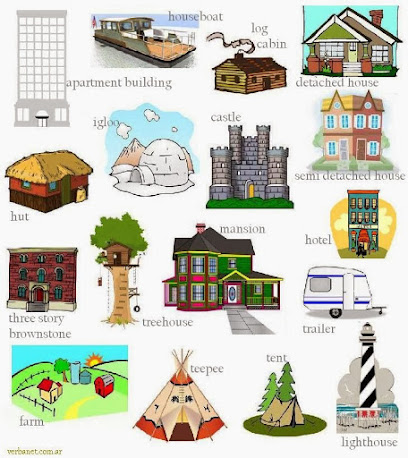
 Let us see how many types of houses are there.
There are two types of houses
1. temporary house. 2. Permanent house
Temporary house are also called kwacha-house. These are made up mud and straw. People who can stay for some time they made temporary houses. Examples ; hut, tents,

Permanente houses are called pucca-house. These are made up of cement, steel, bricks and sand. Bungalows and apartments. People live at one place for long they made permanent houses.
People made different types of houses depending upon the climate. and  their work. Some people who live on hill places they made a house on the tree or wooden house.
Some are made water boat-house. Some are stay temporary in tents.


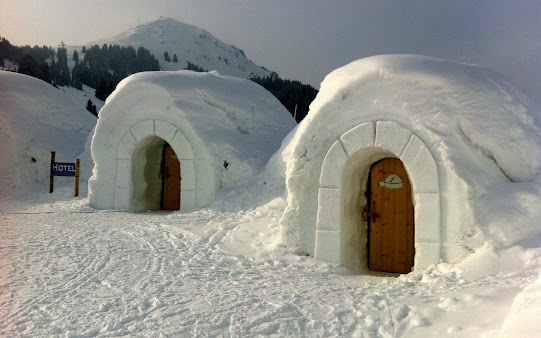
People who in cold places they made there houses with igloos. Eskimos live in it.
People who are living on the hills their are made house with wood.


Let now the parts of a houseIn a house we have veranda, dinning-hall, bed-room, reading-room, kitchen-room, storeroom, common- hall and we have a garden around our house.

We spend most of time in common-hall with our family members. We use. Veranda, to take rest and relax. Dinning-hall for lunch and dinner.
Bed-room for sleeping. Reading-room for reading, writing and prepare.
Kitchen –room for preparing food. Store- room for to keep our extra things.

House should have windows and doors. Windows and doors allow sunlight inside. Sunlight kill the germs and it give light for us. House protect us heat, cold, rain and enemies. It gives shelter for us.
The area around your house. we should keep clean. We should throw garbage in dust bin. 
Mosquitoes and germs fly on the garbage. And they spread diseases make us sick.
Look, how beautifully Lata's
Lata’s house is decorated. Because they are celebrating festivals. Ask your friends when and how they decorate their houses. We decorate our house flower, leaves, curtains and rangolis.

Thank You,

REFERENCE BOOKS:


Saturday, January 16, 2016

NANDITHA IN MUMBAI-(TEXT)


I came to Mumbai a month ago. Since we came, mother has been admitted in the hospital. We had to come to Mumbai for her treatment.

The Big City – Mumbai!
I have slowly got used to the city. I still remember the day when mother and I got off the train at the Mumbai station. It was so crowded! I quickly caught hold of mother’s hand. I was thinking about how Mama would find us in the crowd.
Just then, I heard someone calling loudly from behind, “Nandita, Nandita.” I turned back, and there was Mama. We left the station and were soon on our way to Mama’s house. But, again, it was so crowded everywhere.
There were many huts lined all along the narrow street. We went through the street to reach Mama’s house. Mama, Mami, their two daughters and a son – all live in one room. Now, I too live here with them.

It is here that we sit, sleep, cook and wash – all in one room. My house in the village also has only one room, but we have separate places for cooking and for bathing. We also have a courtyard outside.

Mami, Seema and I get up at 4 o’clock every morning and go to the public-tap to fill water. Oh no! You won’t believe how many fights there are for water. If we are just a little late, then we are not able to fill water for the day.
There is no tap in our house in the village too. The pond in the village has water. It takes twenty minutes to walk to it. In summer, sometimes, the water in the pond dries up. Then we have to walk for almost one hour to the river to get water. But in the village, there were no fights for water.
In the street where Mama lives, there is a toilet at one end. Everyone in the street uses that toilet. It is always very dirty and smells so bad. At first, it used to make me want to vomit.
At times, there is no water. We have to take water with us. Now I am getting used to all this. In the village, people go to the open places or fields for toilet. The men and women go to different places.

Learning New Things
Everyday I go to the hospital by bus to see my mother. At first, I was too scared to get into such crowded buses. I was not at all used to it. I was afraid.
But now, it is not like that. I know how to stand in line, how much to pay for the ticket, where to get down. Where we stay, there is a tall building nearby.
My Mami works in seven houses there. She washes utensils and cleans the houses. One day I went there with her. When I first saw the building, I thought that it was one big house. But I found that there were many houses, one on top of another. I was wondering how I would climb so many stairs, but there was a lift to take people up and down.
It was like a big iron cage with fan and light and even a bell. So many of us got into the lift. Somebody pressed the button and lift went up quickly. To tell you the truth, I was very scared in the beginning.

Mami took me first to Babloo’s house. His house was on the twelfth floor. What a big house! So many rooms – one to sit in, one to eat in, one to sleep in, and one to cook in.
Their toilet was also in the house! It took Mami a lot of time to clean Babloo’s house, but she could work easily. There was a tap in the kitchen and water flowed from it.
Babloo put a bucket under the tap to fill water for his bath. Then he sat down to watch TV. So much water was wasted – I did not like it. I went
and closed the tap.
Babloo’s house had big glass windows. Mami told me to look down from the window. I could see Mama’s street and the houses, but I could not make out which was his house. From up there, everything below looked like small toys. I was quite afraid to look down from such a height.

Mama had said that he would take me around to see Mumbai . The children around here talk a lot about Chowpatti.

They say that big film stars also live there. May be when I go there, I might see a film star! These days, Mama is so worried – I cannot ask him to take me to Chowpatti.
Last week some people had come with a notice that everyone should move out of this place. They say a big hotel will be built there.
Mama was saying that this is the third time in the last ten years that he got such notices. People who live here have been given another place to make their houses.  But it is very far away another corner of the city.
There is no drinking water, no electricity. I don’t even know if any bus goes there. How will Mama reach his work place from so far? How much money will he have to spend, and how much time also.
And Mami, will she get some other work there! If Mama moves to a new place, how will I be able to visit my mother? Mother is not even completely well as yet!

Friday, January 15, 2016

DROP BY DROP

ENVIRONMENTAL STUDIES
CBSE CLASS III

Madho lives in Bajju- a small village in Rajasthan. It is hardly
a village ! All you see is sand all around. One can see some houses when the sand does not blow.
 Everyone in Madho’s family is upset. Every summer there is water scarcity in his place. This year, it is worse. It did not rain at all. His mother and sister have to walk a longer distance to fetch water as the nearby pond has also dried. Each day they spend hours just to get four pots of water. While walking on the hot sand their feet burn and blisters just cannot be avoided.

When the train carrying water comes they are very happy. Madho’s father goes to fetch water in his camel-cart. But this does not happen often.

People keep waiting days and days for water. Some people collect rain water. This is done by a special method  by making tanks (tanka). Do you know, what a tanka is and how it is built?

1To build a tanka, a pit is dug in the courtyard and it is made pucca. The tanka is kept covered with a lid. The roof of the house is made sloping so that the rainwater collected here flows through a pipe into the tanka.

A sieve is attached to the mouth of the pipe so that no dirt goes into the tanka. This water is used for drinking after it is cleaned.

Just like Madho, Sonal also faces water scarcity in her house. She lives in Bhavnagar. Water is supplied only for half an hour in a day. All the people of the area depend on only a single tap ! Can you imagine what happens ?

Sonal is determined to take water from the tap. Whenever she gets a chance she fills her bucket even if it is just drop by drop. Let us find out how many drops will fill a bowl or a mug.

Water scarcity can be defined as a lack of sufficient water, or not having access to safe water supplies.Water is a pressing need in many areas of the world.

That scarcity is spreading as water is needed to grow and process food, create energy, and power industry for a continually growing population. climate change is a key contributing factor.

Clean, potable water is an essential ingredient of a healthy human life, but 1.2 billion people lack access to water according to recent estimates from the International Water Management Institute cited in the worlds water.
Storing and Moving Water
Understanding where your water comes from will help you understand what you can do to mitigate the effects of drought. Your water supply might be from surface or from groundwater. Conserving water is the best way for us to make sure that we all have water even when we are in drought.

Dams
To make sure that they have enough water throughout the year, people build dam  to store water when they need it.then a dam is built on a river, a large lake, called a reservoir, is made. The reservoir “stores” the water for people’s use. Reservoirs can provide fish and wildlife habitat and also are often great places for us to boat and fish. They also can be used to produce power.

Groundwater and Wells
Another source of water is groundwater (water found below the surface of the earth). aquifers are like underground lakes. Just like lakes above the ground, aquifers can be different sizes. Some are very small and some are very large, like the Ogallala Aquifer.

people drill wells into aquifers so they can bring water to the surface to use. Water in aquifers can be just a few feet below the earth’s surface or hundreds of feet deep. The water that is closer to the surface is easier for us to use, but it can also be more easily polluted than the water that is much deeper. 

Canals and Pipelines

Water canals and pipelines have been built in many places to make sure that as many people as possible have access to water supplies. Canals and pipelines are used to transport water from reservoirs and wells to farmers for irrigation and cities for drinking water. Canals like the Central Arizona Project and the Los Angeles Aqueduct carry billions of gallons of water each year to areas that do not have enough water

Desalination
We need fresh water for drinking, for our daily activities, and for growing our food. But almost all of the water on the surface of the earth is salt water from the oceans and seas. In fact, 97 percent of all water on earth is salt water.

People have been trying to find a way to use ocean water in place of fresh water for many years. With new technology, turning seawater into water that we can drink and use is becoming much easier and much cheaper. 

Desalination, or removing salt from seawater, is still expensive, but some cities in the United States and other countries are building desalination plants to help them meet their water needs. 

Cleaning of water
To clean water we should have sewage treatment plants. when it, can be used again at home, agriculture in industry etc. so again the process is started.

Different methods of saving water
Daily we use 20% water in kitchen, 20% in garden, 20% in laundry% and 40% of water in our bath rooms.
Turn off the tap when brushing your teeth. A running tap can use six litres of water per minute. Use the minimum amount of water needed for a bath by closing the drain first and filling the bath only 1/3 full. Stopper bath before turning water. The initial burst of cold water can be warmed by adding hot water later.
Make your garden water efficient. Less watering doesn't have to mean less gardening! Start opting for plants that don't mind going without a drink for a while. Your garden centre will be able to recommend plants that need less water.
Don't leave the tap running to clean dishes or vegetables. Use a bowl of water instead. A running tap uses 6 litres of water per minute.
Take shorter showers - we recommend four minutes. On average a shower uses 10 litres of water a minute. Fully load your washing machine. A full load uses less water than two half-loads.
Only flush the toilet if you need to. On average, each flush uses 7 litres of water. Keep a jug of water in the fridge. Planning ahead means there is no need to run the water until it gets cold.
Verify that your home is leak-free, because many homes have hidden water leaks. Fix leaking taps. A dripping tap can waste more than 60 litres of water per week.
Order a water butt. Collect rainwater to use on your plants and lawn. Never put water down the drain when there may be another use for it such as watering a plant or garden, or cleaning.Store drinking water in the refrigerator rather than letting the tap run every time you want a cool glass of water.
You have given some suggestions to re-use water. People use these methods only under conditions when there is a scarcity of water. Do you know, one of the reasons for the scarcity of water is because people waste it. Just think, how good it would be if everyone got water !

THANK YOU,