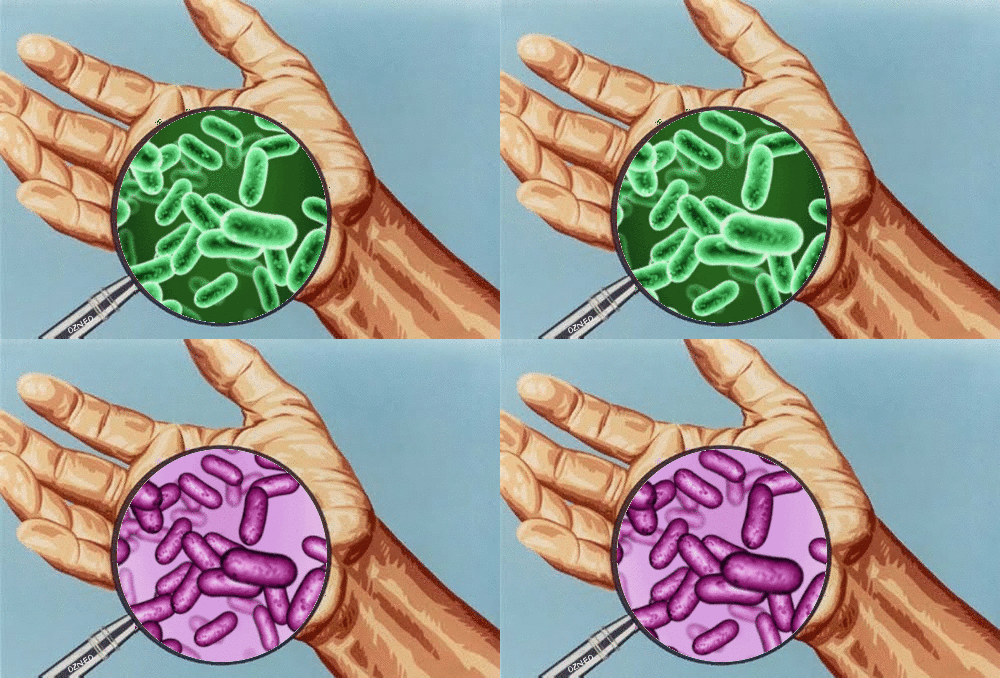
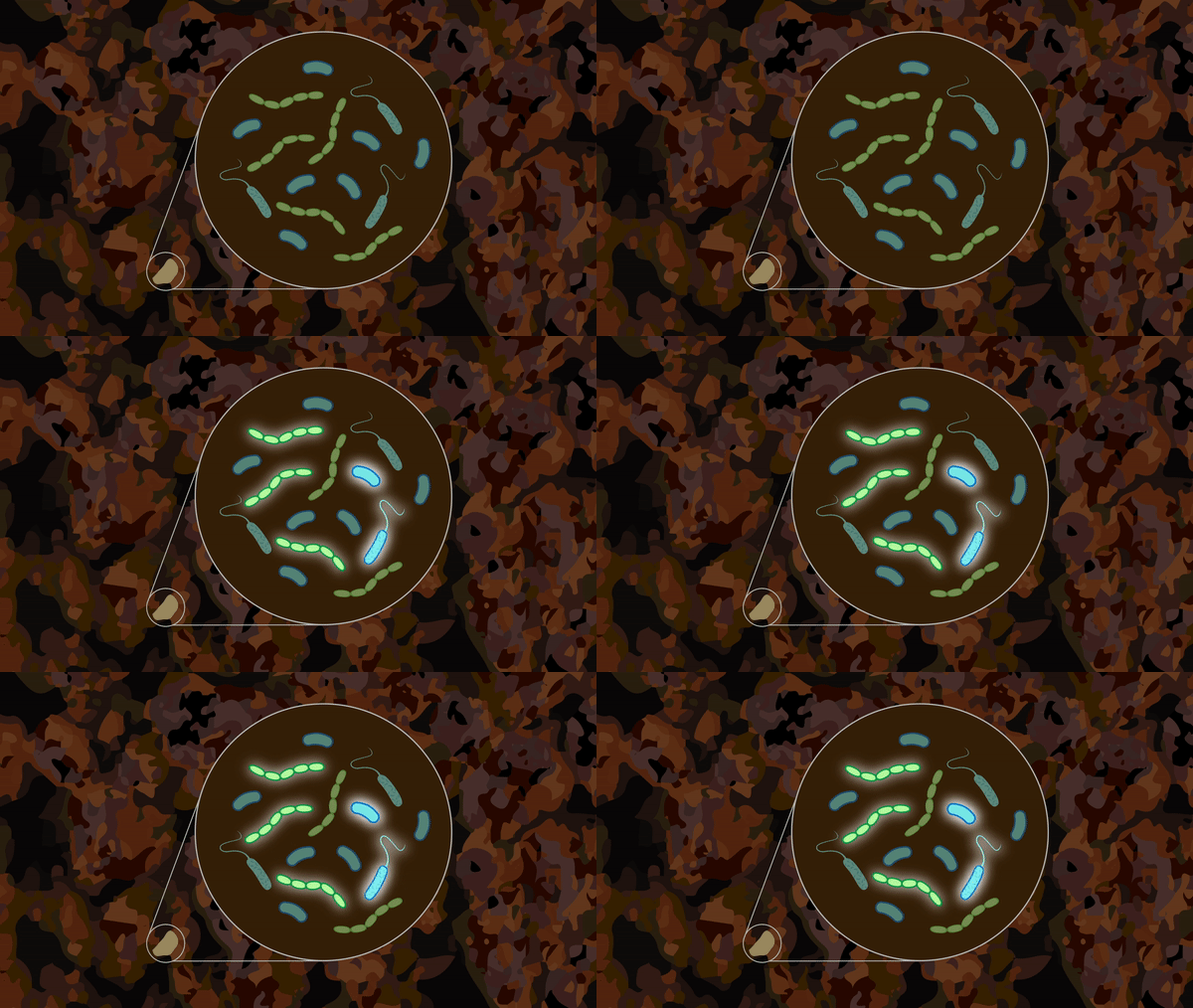
Bacteria: Bacteria are small single-celled organisms. Bacteria are found almost everywhere on Earth and are vital to the planet's ecosystems. Some species can live under extreme conditions of temperature and pressure. The human body is full of bacteria, and in fact is estimated to contain more bacterial cells than human cells. Bacteria are one of the oldest life forms. They are unicellular i.e. they are made up of one cell. They appear in a variety of shapes & sizes (Spherical, elongated, spiral etc. They inhabit soil, water, radioactive waste & the deep portions of Earth's crust. In fact, they also live in plant /animal bodies.

They live in colonies. Some of them are autotrophic (prepare their own food), while others are heterotrophic (depend on others for their food). bacteria are single-celled microorganisms with prokaryotic cells, which are single cells that do not have organelles or a true nucleus and are less complex than eukaryotic cells. Bacteria with a capital B refers to the domain Bacteria, one of the three domains of life. The other two domains of life are Archaea, members of which are also single-celled organisms with prokaryotic cells, and Eukaryota. Bacteria are extremely numerous, and the total biomass of bacteria on Earth is more than all plants and animals combined.
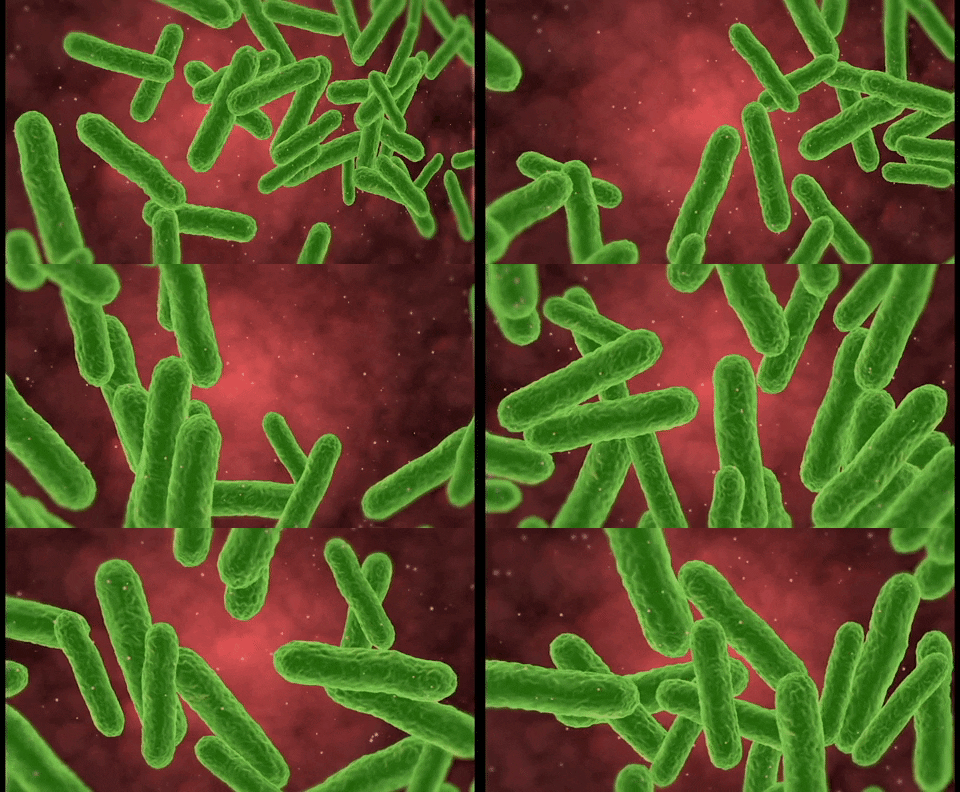
Evolution of Bacteria Bacteria first arose on Earth approximately 4 billion years ago, and they were the first forms of life on Earth. For 3 billion years, bacteria and archaea were the most prevalent kinds of organisms on Earth. Multicellular eukaryotes did not appear until around 1.6-2 billion years ago. Eukaryotic cells, which make up all protists, fungi, animals, and plants, also contain what was once bacteria; it is thought that the mitochondria in eukaryotes, which produce energy through cellular respiration, and chloroplasts in plants and algae, which produce energy through photosynthesis, both evolved from bacteria that got taken up into cells in an endosymbiotic (mutually benefiting) relationship that became permanent over time.
Structure of Bacteria
The structure of bacteria is known for its simple body design. Bacteria are single-celled microorganisms with the absence of the nucleus and other cell organelles; hence, they are classified as prokaryotic organisms. They are also very versatile organisms, surviving in extremely inhospitable conditions. Such organisms are called extremophiles. Extremophiles are further categorized into various types based on the types of environments they inhabit: Thermophiles, Acidophiles, Alkaliphiles, Osmophiles, Barophiles
Cryophiles
Another fascinating feature of bacteria is their protective cell wall, which is made up of a special protein called peptidoglycan. This particular protein isn’t found anywhere else in nature except in the cell walls of bacteria. But few of them are devoid of this cell wall, and others have a third protection layer called capsule. On the outer layer, one or more flagella or pili is attached, and it functions as a locomotory organ. Pili can also help certain bacteria to attach themselves to the host’s cells. They do not contain any cell organelle as in animal or plant cell except for ribosomes. Ribosomes are the sites of protein synthesis. In addition to this DNA, they have an extra circular DNA called plasmid. These plasmids make some strains of bacteria resistant to antibiotics.
Bacteria Characteristics
Bacteria are single-celled organisms. They lack organelles such as chloroplasts and mitochondria, and they do not have the true nucleus found in eukaryotic cells. Instead, their DNA, a double strand that is continuous and circular, is located in a nucleoid. Together, the cell membrane and cell wall are referred to as the cell envelope. Many bacteria need a cell wall in order to survive.
Reproduction occurs through binary fission which is the splitting of a bacterial cell after it reaches a certain size. Bacteria reproduce asexually, so the two daughter cells that result from binary fission have the same DNA as the parent cell. However, some bacteria can also exchange genetic material among one another in a process known as horizontal gene transfer. This method involves two already existing bacteria; it is not a form of transmission from parent to child.
Classification of Bacteria
Bacteria can be classified into various categories based on their features and characteristics. The classification of bacteria is mainly based on the following:
Shape
Composition of the cell wall, Mode of respiration Mode of nutrition
Bacteria Shapes
Bacteria come in a myriad of shapes. The three main shapes of bacteria are coccus, spiral, and bacillus. Cocci are bacteria that are spherical or ovoid in shape. Some cocci remain attached after binary fission, even though separate cells have been formed. For example, diplococci are cocci in pairs, streptococci are chains, and staphylococci are clusters of multiple cocci. Tetrads are square arrangements of four cocci, while sarcinae are cubes of eight cocci.

Spiral bacteria are, as the name suggests, spiral-shaped. Spirillums are thick, tough spirals. Spirochetes are spirals that are thin and flexible. Vibrios are comma-shaped rods with a small twist. Bacilli are rod-shaped bacteria. Like cocci, bacilli can be solitary or arranged together. Diplobacilli are two bacilli arranged next to each other, and streptobacilli are chains of bacilli. Bacteria can also be other shapes such as filamentous (long and thin), square, star-shaped, and stalked. This diagram depicts the numerous shapes of bacteria.
Types of Bacteria
The cell wall also makes Gram staining possible. Gram staining is a method of staining bacteria involving crystal violet dye, iodine, and the counterstain safranin. Many bacteria can be classified into one of two types: gram-positive, which show the stain and appear violet in color under a microscope, and gram-negative, which only show the counterstain, and appear red. Gram-positive bacteria appear violet because they have thick cell walls that trap the crystal violet-iodine complex. The thin cell walls of gram-negative bacteria cannot hold the violet-iodine complex, but they can hold safranin. This makes gram-negative bacteria appear red under Gram staining. Gram staining is used for general identification of bacteria or to detect the presence of certain bacteria; it cannot be used to identify bacteria in any specific way, such as at a species level. Examples of gram-positive bacteria include the genera Listeria, Streptococcus, and Bacillus, while gram-negative bacteria include Proteobacteria, green sulfur bacteria, and cyanobacteria.


Examples of Bacteria
Escherichia coli is one example of a common species of bacteria. It is bacillus-shaped and found naturally in the intestines of many animals including humans, where it produces vitamin K and b-complex vitamins. E. coli is also often used in laboratory research since it reproduces quickly and is hardy. Most strains of E. coli are harmless to humans, but some can cause infection. E. coli infection can result in gastrointestinal problems like diarrhea, and in more severe cases, bacterial meningitis or pneumonia can occur.

Lactobacillus acidophilus is another bacillus-shaped species of bacteria naturally found in places like the intestines and vagina, where it protects against harmful bacteria. It is a probiotic, a bacterium found in certain foods like yogurt and other fermented foods that is consumed in order to help absorb nutrients and replenish the body’s supply of “good” bacteria. It can also be consumed in small amounts by people with lactose intolerance in order to help them consume lactose.
Reproduction in Bacteria
Bacteria follow an asexual mode of reproduction, called binary fission. A single bacterium divides into two daughter cells. These are identical to the parent cell as well as to each other. Replication of DNA within parent bacterium marks the beginning of the fission. Eventually, cell elongates to form two daughter cells. The rate and timing of reproduction depend upon the conditions like temperature and availability of nutrients. When there is a favourable condition, E.coli or Escherichia coli produces about 2 million bacteria every 7 hours. Bacterial reproduction is strictly asexual, but it can undergo sexual reproduction in very rare cases. Genetic recombination in bacteria has the potential to occur through conjugation, transformation, or transduction. In such cases, the bacteria may become resistant to antibiotics since there is variation in the genetic material (as opposed to asexual reproduction where the same genetic material is present in generations)

Prokaryote – An organism that has a simple prokaryotic cell bacteria and archaea are prokaryotes.
Binary fission – The method by which bacteria reproduce asexually through dividing.
Probiotic – A bacterium that helps maintain a healthy digestive tract when consumed. Horizontal gene transfer – Gene transfer between two organisms that are not parent and offspring.
Useful Bacteria
Not all bacteria are harmful to humans. There are some bacteria which are beneficial in different ways. Listed below are few benefits of bacteria: Convert milk into curd – Lactobacillus or lactic acid bacteria Ferment food products – Streptococcus and Bacillus Help in digestion and improving the body’s immunity system – Actinobacteria, Bacteroidetes, Firmicutes, Proteobacteria Production of antibiotics, which is used in the treatment and prevention of bacterial infections – Soil bacteria
Harmful Bacteria
There are bacteria that can cause a multitude of illnesses. They are responsible for many of the infectious diseases like pneumonia, tuberculosis, diphtheria, syphilis, tooth decay. Their effects can be rectified by taking antibiotics and prescribed medication. However, precaution is much more effective. Most of these disease-causing bacteria can be eliminated by sterilizing or disinfecting exposed surfaces, instruments, tools and other utilities. These methods include- application of heat, disinfectants, UV radiations, pasteurization, boiling, etc.
THANK YOU