Showing posts sorted by relevance for query NO PLACE FOR US?. Sort by date Show all posts

Saturday, March 5, 2016

UP YOU GO-TEXT

UP YOU GO
ENVIRNOMENT STUDIES
CBSE-V

Mountaineering Camp: 2nd February 1984 by Kalyani Raghunathan:
Nehru Institute of Mountaineering (NIM) is rated as one of the best mountaineering institutes in India and also considered as the most prestigious mountaineering institute in Asia.

The proposal to have a mountaineering Institute at Uttarkashi was mooted by the Ministry of Defence, Government of India and the Government of Uttar Pradesh in 1964.

Uttarkashi was specially selected as the home of NIM, primarily because of its close proximity to the Gangotri region in western garhwal, which undoubtedly has the best climbing and training potential in India and perhaps in the world. 

The Institute took shape in 1965 at the Provincial Armed Constabulary Campus at Gyansu on the north bank of the river Bhagirathi.

The present location, about 5 Km away across the Bhagitrathi River, was selected in 1970 by a team comprising Late Shri Harish Sarin (then Secretary), Captain M.S.Kohli and the architect, Mr. Rahman and NIM moved to its new location in 1974.

It is now located at 4300 AMSL in the Ladari Reserve Forest, amidst a dense pine forest, overlooking the sacred river and the valley of gods. It has a sprawling campus, spread over almost seven hectares of prime forest land. 

The Institute is headed by a Principal who is handpicked officer by the Ministry of Defence. It has Training and an Administrative wing. The Training Wing comprises of the Vice Principal, the Medical Officer, the intrepid NIM instructional and Kitchen staff. The Administrative Wing which deals with account, rations and equipment are looked after by the Registrar and the Equipment Officer, respectively.

The aim of the Institute is to introduce and initiate young men, women and school children to the mountains and nature through its various Mountaineering and Adventure courses.

Emphasis is laid on instilling the concept of Adventure and following conventional environmental guidelines to ensure environmental awareness and conservation
​
NIM was established at Uttarkashi on 14th Nov 1965 to honor the great desire of Pt. Jawahar Lal Nehru, the first Prime Minister of India, who was an ardent mountain lover

he Nehru Institute of Mountaineering, Uttarkashi is planning to conduct seven days (07 days) Preliminary Skiing course

Preliminary Skiing Course - Fee structure in Indian Currency
Indian                     Foreigner                      Students(Indian)
5000/-                     12000/-                          4000/-

TERMS & CONDITIONS:
Fee includes: Expenses on food, accommodation, equipment, transportation, medicines and other training expenses during the course.
​
Admission to Foreigners: Have to report to the Principal one day in advance along with the Passport and valid Visa for direct admission into a course, UDS 400 for adventure course and USD 800 each for remaining courses is to be paid as course fee.
​
Refund of Fee: Cancellation of seat 2 months earlier entitles refund of fee with 25% deduction.
​
Armed Forces & Para Military Personnel: Serving Armed forces, Para Military and NCC Personnel, should apply through their respective Service Headquarters and Departmental Channels. They can also however apply as private trainees.

Repetition of Course : The courses conducted in NIM are subsidized and the vacancies are limited. Repeating a course by an individual leads to denial of opportunity to someone else.

This Institute also conducts special courses for schools and establishments on full cost basis i;e. Rs 1200/- per individual per day for 15 days. These are open and anyone can apply for their confirmation.
​
Transfer of Seat: Request of transfer of seat on compassionate ground may be considered only once. No Refund of fee is permitted thereafter.
​
Arrival: Trainees must arrive an evening before commencement of the course, also late arrivals even by a day will not be permitted to join the course.
​
Forms should be submitted through registered post on the following address:-
The principal
Nehru institute of mountaineering
Uttarkashi (uttarakhand)-249 193.

On receipt of Form and Training Fee Applicant will be informed by us by Email/Telephone on Provisional basis and will be subsequently informed for final date on short notice.   
                                                                         
Arrival:
Trainees must arrive an evening before commencement of course. Late arrivals even by one day will not be permitted to join the course.

Let us know some our  kendriya vidyalayas teacher experience when they went training for  Nehru Institute of Mountaineering, Uttarkashi. We were at the mountaineering camp and were very excited. Twenty of us were teachers from Kendriya Vidyalayas.

There were other women from banks and other institutions. Today was the second day of the camp. In the morning as I got out of bed and put my foot down, I screamed in pain.

I remembered yesterday’s 26 kilometre walk with the heavy rucksack on
my back. I was afraid to go back to that steep climb and the rough narrow path.

With tears in my eyes I started walking slowly towards the room of Brigadier Gyan Singh, the Director of our adventure course. I was thinking of what I would say to excuse myself from that day’s trek. Suddenly, I heard his deep voice from behind.

“Madam, what are you doing here at breakfast time? Hurry up! Otherwise you will have to trek on an empty stomach.”

“Sir, Sir….,” I could not say any more. “You have came to tell me that you have blisters on your feet, that you cannot walk, isn’t it?” “Yes, sir.” “That is nothing new. Now get ready quickly.”

I hung my head and rushed back to get ready. I had just turned when I heard his voice again, “Listen, madam. You will lead group number 7. You will have to help any member who has difficulty climbing the mountain. You have already been told about the responsibilities of a group leader in the mountains.”

A big responsibility:
I started thinking about what a leader must do:
Help others in carrying their bags.
Let the group go ahead and keep to the last.
Help those who cannot climb properly.
Find a good place to stop and rest.
Look after those who are not well.
Arrange for food for the group.

The most important thing is to be ready to be punished even when some one else may have made a mistake. I realised that there was a special kind of discipline here. I wondered whether the camp will still be fun!

Group No: 7
Group No. 7 included girls from Assam, Manipur, Mizoram, Meghalaya and Nagaland. I was the only teacher from Kendriya Vidyalaya in this group. I was happy to meet my new group members.

Most of them could not speak Hindi well. I still feel bad that after being together for 21 days, I could not talk even once with Khondonbi from Mizoram. She spoke only Mizo. But in our hearts we grew close to each other.

Crossing the river:
We got vitamin C, iron tablets and hot chocolate milk with our breakfast. These were given for strength and to keep us warm in the cold. Every morning there would be a medical check up. We tied our bandages and counted the days left!

After an eight kilometre trek we reached a river. There was a thick rope tied across the river, from one bank to the other. The rope was tightly fixed to pegs or ‘pitons’ on both the sides. I was feeling nervous. I started thinking what would happen if the rope came out. I was trying to estimate how wide the river was.

Our instructor tied a rope around his waist and put a sling (type of hook) in it. He then put the sling on the thick rope tied across the river. Walking through the icy water, he went to the other side.

No one was ready to step into the fast flowing river. Everyone was pushing each other to go first. I stood last in the line hoping that no one would see me.

Just then our instructor came near me with the sling and rope in his hands. I knew there was no escape now. I was ready, but did not have the courage. Sir could guess my fears. He called out loudly, “Three cheers for Sangeeta madam!” And before I knew it, someone had gently pushed me into the water.

I felt as if my feet were frozen. I started shivering, my teeth were chattering. I caught hold of the rope and started putting my feet firmly on the river bed.

As I walked further in, the river got deeper and slowly the water reached upto my neck. In the middle of the river I lost my balance and started slipping. I was so scared and felt so cold, that the rope slipped from my hands. I started shouting for help.

I was sure I would be carried away by the river. But no, I found that I was tied with the rope to the sling. “Hold the rope! Hold the rope”, I could hear the shouts. I somehow managed to get hold of the rope and pull myself forward.

Slowly, with some courage, I reached the river bank. I felt a special kind of happiness as I came out of the water. Happiness on finishing a challenging task. Now, standing on the bank, I was calling out to the others to hold the rope tightly. I knew that this confidence was a result
of facing a challenge with courage.

Rock climbing:
We had to climb 15 km to reach Tekla village. It was at a height of 1600 metres. Our rucksacks had all that we may need – food packets, water bottle, rope, hook, plastic sheet, diary, torch, towel, soap, windcheater, whistle, glucose, jaggery, chana and some other snacks.

We could see fruits and vegetables growing in the step fields. We saw Colonel Ram Singh standing on a 90 metres high flat rock with pegs and ropes.

We had been told to first observe the rock carefully and identify holds – places where we can put our hands and feet. Today I was not going to back out.

I stood first in the line. Our instructor tieda rope around his waist. He put the sling, and held the thick rope which was hanging. He started climbing as if he was running up.

I also put my sling. But as I took my first step, I slipped. And there I was – swinging from the rope! “Keep your body at an angle of 90° while
climbing,” I heard. “Keep your back straight.
Do not bend.”
Keeping this in mind, I imagined the rock as flat ground and started to climb up. Again while coming down we had to use the rope, in a special way called ‘rapling.’ I did this with the same fearlessness.

A funny incident:
It was evening. Khondonbi was feeling hungry. We did not have anything to eat. She jumped over the fence and got into a field. She quickly plucked two big cucumbers and came back.

Just then a woman came from behind and caught hold of her bag. She started saying something to Khondonbi in her own language. We could not understand what she was saying.

Khondonbi was trying to explain in her Mizolanguage which we could not understand. I tried to explain in Hindi but neither of them could understand it. Finally, I folded my hands to say that we were sorry.

By then our group had gone far ahead. It was already dark. I thought we had lost our way. Now we were really scared. We could not see anything even with our torches.

I started sweating even though it was cold. I tightly held Khondonbi’s hand. I called out loudly, “Where are you all? Can you hear me?” My voice echoed in the mountains.

We both started to whistle loudly and flashed our torches. Probably the group had noticed that we were missing. We heard some whistles at a distance. I understood the signal.

We held each other's hand tightly and waited. Khondonbi felt that we should keep talking. She started singing a Mizo song loudly. After some time, we saw them coming towards us. At last! We were with the group again.

A special guest:
After dinner we met a special guest – Bachhendri Pal. She had just been
Up You Go! 83 selected as a part of the team to climb Mount Everest. She had come to seek the blessings of Brigadier Gyan Singh. It was a happy evening – we were all singing.

Bachhendri also joined us in singing and dancing on the famous Pahadi song ‘Bedu Pako, bara masa, kafal pako chaita, meri chhaila.’ At that time we had no idea that Bachhendri would become the first Indian woman to reach Mount Everest and create history.

Camp in the snow:
We were standing at a height of 2134 meters. We were to spend the night here. Everyone was busy trying to put up the tent. We used double layered plastic sheets for the tent and for the ground.

The air between the layers would help to keep us warm. We put in the pegs and began to put up the tent. As we tied it from one side, the wind flew the tent from the other side.

After quite a lot of pulling and tugging, we managed to get the tent up. Then we dug a drain around the tent. We were feeling very hungry. We collected some firewood and stones to make a chulha and cooked some food.

After the meal, we collected all the waste in a bag to clean the camp site. Soon we got into our sleeping bags. I was not sure if I would be able to sleep in it. Would it be comfortable?

Would I not feel cold? But the bags were filled with soft feathers, which help in keeping us warm. We were all very tired. So very soon we fell asleep.

The next morning we woke up and found that it was snowing. White soft fluffy snowflakes were gently falling. Wow! It was so beautiful ! The plants, the trees, the grass and the mountains – everything looked white.

Today we were to climb higher, to 2700 metres. We walked carefully on the snow with the help of sticks. It was difficult because we kept slipping. By afternoon we had reached snow covered mountains. We enjoyed throwing snowballs at each other and making a big snowman.

Last day at camp:
We were getting ready for the camp fire. Each group presented a programme. We were enjoying – telling jokes and laughing, singing and dancing around the camp fire. Soon it was midnight.

Brigadier Gyan Singh got up and called me. I thought, “Oh, no!
what have I done this time?” But when Sir announced my name for the ‘Best Performance Award’ I stood still. He blessed me and tears of joy rolled down my face.

Alone on the mountain top
A twelve-year old girl living in the mountains was out on a school picnic. She climbed a mountain peak of 4000 metres with her friends. The girls had done this for fun and adventure. Soon it was dark and they could not come down. It was also cold and scary.

They were alone without any food and it was a long night. This happened to Bachhendri Pal, played when she was a young girl. Bachhendri grew up in Nakuri village in the Garhwal area of Uttarakhand.

When she grew older, she joined Nehru Institute of Mountaineering, Uttarkashi. Her guide was Brigadier Gyan Singh. Bachhendri did very well in her training. She started to train women in mountaineering courses. In 1984, Bachhendri was selected as a team member to climb the Mount Everest.

Snow storm:
There were seven women in that 18 member team. On the night of 15th May the team was very tired after having reached a height of 7300 metres. The team put up their tents and went to sleep. Around midnight they heard a loud sound and then a bang.


Before they were fully awake, the tent flew off and something very heavy hit them. There was a terrible snow storm. Bachhendri was almost buried under the snow and was hurt on the head. Many of the team members were also injured. The others used snow-picks and axes to dig out those who had been buried under the snow.

The rest of the team members returned to base camp but Bachhendri went ahead, climbing slowly but steadily towards the peak. It was seven minutes past one o’clock in the afternoon of 23th May when Bachhendri Pal stepped onto the peak of 8900 metre high Mount Everest also called Sagarmatha in Nepal.

There was another team member with her. There was no space for two people to stand on the top at the same time. One slip and they would fall straight down-thousands of feet below! Bachhendri and her team-mate dug into the snow and pitched their axe firmly in the ice. Using this as a hook, they tied themselves to it with a rope.

 Only then two of them could stand there. She was shivering with cold but filled with the warmth of achievement. She bowed her head, pitched the national flag and took photographs. She spent 43 minutes on the highest peak in the world. Bachhendri Pal became the first Indian woman and the fifth woman in the world to reach the peak of Mount Everest.

THANKYOU,

NANDITHA  AKUNURI 

Tuesday, August 10, 2021

Independence Day: History, importance and significance of the day -Speech and essay writing


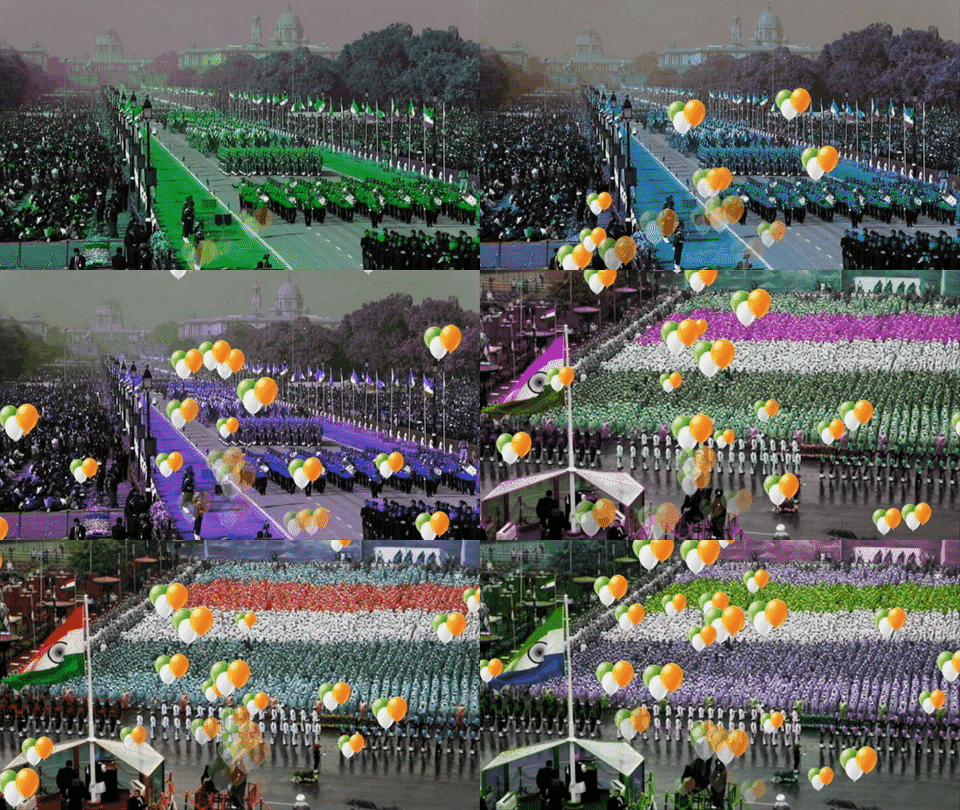
Independence Day is both an occasion to celebrate and to remember the struggles of those who fought to give us this gift. It makes my heart beat with pride, to see the colors of Independence Day spreading happiness and great joys all around. May the glory of Independence Day be with your forever. Today we come together, Be the cause for the unity, Make it Beautiful day– Happy Independence Day!
 

Independence Day of India, which is celebrated religiously throughout the Country on the 15th of August every year, holds tremendous ground in the list of national days, since it reminds every Indian about the dawn of a new beginning, the beginning of an era of deliverance from the clutches of British colonialism of more than 200 years. It was on 15th August 1947 that India was declared independent from British colonialism, and the reins of control were handed over to the leaders of the Country.


On August 15, 1947 India had achieved independence after years of struggle. On this day, it ceased to be a colonial nation and secured full autonomy from the British that ruled over it for years. The day holds great significance in the heart of every Indian citizen living in India and abroad. We as Indians pay respect to all the leaders who fought bravely for our nation's freedom in the past.


On this day, the Prime Minister of India will hoist our tricolour flag at the Red Fort, Old Delhi. He will also deliver a speech to the nation as well. Independence day i.e. the 15th of August is declared as a national holiday which means every government office, post offices, banks and stores will remain shut.
 

While it is a celebratory annual occasion and a national holiday, wherein people hoist the national flag, wear colours signifying the tricolour, take part in many games and cultural programmes, it also coincides with the Partition of the country that brings back painful memories, given that India was severed on communal grounds, much to the dismay of many national leaders and ordinary citizens.
   

On 15 August 1947, when the first Prime Minister of independent India Pandit Jawaharlal Nehru, hoisted the national flag at the Lahori Gate of Red Fort in New Delhi, the Father of the Nation Mohandas Karamchand Gandhi fasted in Calcutta (now Kolkata). He is believed to have spent his time praying, fasting, spinning, and silently protesting the sectarian hatred that had taken over the country.


HISTORY OF INDIAN INDEPENDENCE DAY
History: India was ruled by the Britishers for many years. The East India Company ruled India for about 100 years. It was in 1757 when the East India Company won the battle of Plassey. It was after the win went the Company started exerting power over the India. Our nation had its rebellion against the foreign rule for the first time in 1957. The entire country united against British power. It was an unfortunate event as India was defeated back then but after that time. Indian rule was then passed to the British who ruled our country till India got its independence. Our nation faced a long campaign to gain independence.
   

Britain had weakened after the two world wars and began thinking of ending its rule in India. In 1947, the British government declared the transfer of all powers to India by June 1948, but continuing tensions and violence between Muslims and Hindus led to a consensus for the partition of India into two separate states. To deal with this, the British government proposed on June 3, 1947, that any constitution framed by the Constituent Assembly of India will not be applicable to parts of the country that refuse to accept it.
 

On the same day, a plan for partition was put into action by Lord Mountbatten- the then viceroy of India. Mountbatten’s plan was agreed to by both the Congress and the Muslim League. As new borders were drawn and the world map changed forever, between 300,000 and 500,000 people died on both sides.
  

On August 15, 1947, at midnight, India gained independence and was concluded by the iconic speech by Jawaharlal Nehru, “Tryst with destiny.” India's freedom struggle has always been an inspiration to the work as it was the most non-violent campaign in the world.


The great British rule over India came to an end with the powers transferred to the newly independent entities Pakistan and India. Lord Mountbatten became the first governor-general of the new Dominion of India and Jawaharlal Nehru became the first prime minister of Independent India. The Constituent Assembly that was set up in 1946 became the Parliament of Indian Dominion.
   

Significance: This day reminds us of all the sacrifices that were made by our freedom fighters in order to set India free from British rule. 15th August is a national holiday and the day is then celebrated with flag hoisting, parades and cultural events.
              

INDAIN NATIONL FLAG
The national flag is the depiction of a country’s social, economic and political values. A national flag of a country is a national honour. It carries the values on which the mere foundation of that nation depends. Indian National Flag is of utmost importance for the people of India and holds much spiritual value for them.


It is the roof under which the feeling of nationalism and patriotism flourishes. It represents the hopes and aspiration for the citizen of its country and a symbol of national pride. It is not just a piece of cloth, but a feeling of pride which helps the soldiers to sacrifice their lives just keep it flying high in the sky. "A flag is a necessity for all nations. Millions have died for it. It is no doubt a kind of idolatry which would be a sin to destroy. For, a flag represents an Ideal The unfurling of the Union Jack evokes in the English breast sentiments whose strength it is difficult to measure. The Stars and Stripes mean a world to the Americans. The Star and the Crescent will call forth the best bravery in Islam." "It will be necessary for us Indians Muslims, Christians Jews, Parsis, and all others to whom India is their home-to recognize a common flag to live and to die for." - Mahatma Gandhi
  

Who designed the flag of India? The design of the flag of India that was first presented in 1921 to Mahatma Gandhi, leader of the All-India Congress, was created by Pingali (or Pinglay) Venkayya. It consisted of the colours associated with the two principal religions, red for Hindus and green for Muslims. In India, the term "tricolour" refers to the Indian national flag. The National flag of India is a horizontal tricolor of Saffron colour shows courage, sacrifice, and renunciation. White colour shows truth and purity in thoughts and dark green is the symbol of life prosperity.


The Ashok Chakra can be seen on the Indian National flag, where it is rendered in a navy blue colour on a white background. The Ashoka Chakra has 24 spokes which inspire every Indian to work tirelessly for 24 hours.
       

The Ashoka Chakra is the depiction of the “Dharmachakra”; represented with 24 spokes. Ashok Chakra is also called the wheel of duty. Writing in his journal, Young India, Mahatma Gandhi first spoke about the need for an Indian flag in 1921. He proposed a flag with the charkha or spinning wheel at the centre. The idea of the spinning wheel was put forth by Lala Hansraj, and Gandhi commissioned Pingali Venkayya to design a flag on a red and green banner. The flag underwent some changes and became the official flag of the Congress at the 1931 meeting.
 

There are 24 spokes in the Ashoka Chakra which represents 24 qualities of a person. In other words, these spokes can be termed as the 24 religious paths made for humans. All the paths mentioned in the Ashok Chakra will lead any country on the path of progress. This is probably the reason that designers of our National Flag removed the Charkha from it and put the Ashok Chakra in the middle of the flag. The wheel is called the Ashoka Chakra because it appears on a number of edicts of Ashoka, the most prominent among which is the Lion Capital of Ashoka. 6. Each spoke on the chakra symbolises one principle of life and also the twenty-four hours in the day, which is why it is also called the 'Wheel of Time'.
  

Importance of Indian National Flag
National Flag is a symbol of freedom or self-rule. National Flag is a symbol of national pride. It is the symbol of the political development of India. It provides spiritual guidance to the people of India. It is a symbol of united India. It signifies the rule of self-governance of the Nation. The national flag reminds us of the courage and sacrifice of freedom fighters. It also teaches us to be grateful to Mother India for sustaining our needs. Our national flag is an inspiration to live in peace and harmony with all living beings. The flag displays as a symbol of National joy on National festivals.
  

Code of Conduct for National Flag:
Being a national symbol it is respected by every Indian. There are certain dos and don'ts laid down for common people regarding the Indian flag: When the National Flag is raised the saffron colour band should be at the top. No flag or emblem should be placed either above the National Flag or to its right. All other flags to be placed to the left of the National Flag if they are hung in a line. When the National Flag is carried out in a procession or parade, it shall be on the marching right or in front of the center of the line, if there is a line of other flags.


Normally the National Flag should be flown over important government buildings like the Rashtrapati Bhawan, the Parliament House, the Supreme Court of India, the High Courts, the Secretariats, the Commissioners' office, etc. The National Flag or any imitation of it must not be used for the purpose of trade, business, or profession. The National Flag should always be taken down in the evening at sunset.
 

Celebrations on Indian Independence Day: The national anthem is sung on this day, flag-rising ceremonies and drills are also conducted in every corner of the country. Indians make an effort to dress in a specific way to celebrate their nation and culture. Kite flying is another tradition that is followed on Independence Day with people of all age groups as participants.
  

It represents the freedom that we achieved on this day. The Prime Minister of our country hoists our flag at the Red Fort in Old Delhi. A parade with members of the army and police also takes place. A speech to the nation is delivered by the PM where he speaks on the country's accomplishments in all these years. The prime minister then delivers a televised address to the country, recounting the major accomplishments of India during the previous year and outlining future challenges and goals.
  

In 2007, APJ Abdul Kalam Inspiring Speech on India at European ParliamentAbdul Kalam India's Missile man and former president gave this inspiring speech on india. The speech would be one of the most memorable ones by Kalam. “i am reminded of the dream of the indian poet kaniyan poongundranar who articulated 3,000 years back in tamil classic Purananuru , he says “yaadhum oore yaavarum kelir” which means, which means, ‘I am a world citizen. Every citizen is my own kith and kin’. He said that 3000 years ago. Where there is righteousness in the heart. There is beauty in the character. When there is beauty in the character, There is harmony in the home. When there is harmony in the home, There is order in the nation. When there is order in the nation, There is peace in the world.’
        

All I desire for my country is happiness. Let me be the first person to wish you a special Happy Independence Day! Let's salute our great nation on its Independence Day! I hope you all feel grateful for the freedom you have and are proud of the nation you were born to. JAI HIND!


Sunday, March 6, 2016

WHOSE FORESTS -TEXT


WHOSE FORESTS
ENVIRONMENTAL STUDIES
CBSE-V

Daughter of the jungle
Look at the picture. Where do you think these children are off to, with little bundles on their sticks? When you find out you too would want to go with them!

The children are going to the forest. There they jump, run, climb trees and sing songs in their language called Kuduk. They pick the fallen flowers and leaves, to weave them into necklaces.

They enjoy the wild fruits. They look for birds, whose calls they imitate. Joining them in all this fun is their favourite didi – Suryamani. Every Sunday Suryamani takes the children to the forest.

As they move around, she shows them how to recognize the trees, the plants, and animals. Children enjoy this special class in a forest! Suryamani always says, “To learn to read the forest is as important as reading books.”

She says,”We are forest people (adivasis). Our lives are linked to the forests. If the forests are not there, we too will not remain.”

Suryamani’s story is a true story. Suryamani is a ‘Girl Star’. ‘Girl Stars’ is a project which tells extraordinary tales of ordinary girls, who have changed their lives by going to school.

Growing Up
Suryamani loves the forest since she was a child. She would not take the direct road to school, but would choose the path through the forest. Suryamani’s father had a small field.

Her family used to collect leaves and herbs from the forest and sell these in the bazaar. Her mother would weave baskets from bamboo or make leaf plates out of the fallen leaves.

But now no one can pick up a single leaf from the forest. That is since Shambhu the contractor came there. The people of Suryamani’s village were afraid of the contractor.

Everyone except Budhiyamai. She would say, “We the people of this forest have a right over it. We look after our forests, we don't cut trees like these contractors do. The forest is like our ‘collective bank’ – not yours or mine alone. We take from it only as much as we need. We don’t use up all our wealth.”

Suryanani’s father could no longer support the family on the small land. He moved to the town in search of work. But things did not improve. Sometimes there would be no food in the house.

At times Maniya Chacha (uncle) would send some grain from his small shop to Suryamani’s house. Chacha tried hard and got admission for Suryamani in the school in Bishanpur.

Here they would not have to pay for the fees, uniforms and books. Suryamani would have to stay there and study. Suryamani didn't want to leave her village and forest. But Maniya Chacha was firm.

“If you do not study, what will you do? Go hungry?” Suryamani would argue, “Why should I go hungry? The jungle is there to help!” Chacha tried
to explain, “But we are being moved away from our forests.

Even the forests are disappearing – in their place mines are being dug, dams are being built. Believe me, it is important for you to study, to understand about the laws. Maybe then you can help to save our forests”. Young Suryamani listened, and tried to understand some of what he said

Suryamani’s journey:
Suryamani was filled with joy on seeing the school at Bishanpur. The school was near a thick forest. Suryamani studied hard and passed her B.A. after getting a scholarship.

She was the first girl in the village to do this. While she was in college she met Vasavi didi, a journalist. Suryamani soon joined her to work for the Jharkhand Jungle Bachao Andolan (Movement to Save the Forests of Jharkhand).

This work took Suryamani to far off towns and cities. Her father did not like this. But Suryamani continued her work. Not only that, she also started to fight for the rights of the village people. Her childhood friend Bijoy helped her in this work.

Suryamani had another friend ‘Mirchi’, who stayed with her day and night. Suryamani would share all her thoughts and dreams with Mirchi. Mirchi would listen and say “Keee Keee.” Suryamani had a dream. for her Kuduk community. She wanted all her people to feel proud of being adivasis.

Suryamani’s Torang:
Suryamani was 21 when she opened a centre, with the help of Vasavi didi and others. She called it ‘Torang’, which means jungle in the Kuduk language.

Suryamani wanted that on festivals people should sing their own songs. They should not forget their music and should enjoy wearing their traditional clothes.

Children should also learn about herbs, medicines, and the art of making things from bamboo. Children should learn the language of school but must link it with their own language.

All this happens in the ‘Torang’ centre. Many special books about the Kuduk community and other adivasis have been collected. Flutes and different types of drums are also kept there.

Whenever something is unfair, or if someone is afraid that his land and livelihood would be taken away, they turn to Suryamani. Suryamani fights for everyone’s rights.

Suryamani and Bijoy have got married and work together. Today their work is praised by many people. She is invited, even to other countries, to share her experiences. People of her area are also raising their voice for a new forest law.

Right to Forest Act 2007

People who have been living in the forests for at least 25 years, have a right over the forest land and what is grown on it. They should not be removed from the forest.

The work of protecting the forest should be done by their Gram Sabha. A forest is everything for us adivasis. We can’t live away from the forests even for a day. Government has started many projects in the name of development – dams and factories are being built.

Forests, which are ours are being taken away from us. Because of these projects, we need to think where the forest people will go and what will happen to their livelihood?

Where will the lakhs of animals living in the forests go? If there are no forests, and we dig out our lands for minerals like aluminium, what will be left? Only polluted air, water, and miles and miles of barren land...

Lottery for farming in Mizoram:
You read about the forests of Jharkhand in Suryamani’s story. Now read about forests on the hills of Mizoram. See how people live there, and
how farming is done.

Ding, Ding, Ding.... As soon as the school bell rang Lawmte-aa, Dingi, Dingima picked their bags and hurried home. On the way they stopped to drink water from a stream in a cup made of bamboo which was kept there.

Today not only the children, even ‘Saima Sir’ was in a hurry to get back. Today there would be a special meeting of the Village Council (Panchayat). At the meeting there would be a lottery to decide which family will get how much land for farming.

The land belongs to the whole village, not to separate people. So they take turns to do farming on different parts of the land. A beautiful pot made of bamboo was shaken well. One chit was taken out. Saima Sir’s family got the first chance.

He said, “I am happy that my family gets to choose first. But, this year we cannot take more land. Last year I had taken more and was not able to farm it well. After my sister Jhiri got married and went away it is difficult to manage farming alone.”

Saima Sir asked for ‘three tin’ of land. Little Mathini asked, “ What is three tin of land? Chamui explained, “The land on which we grow one tin of seeds is called one tin of land.” One by one, the village families got their piece of land for farming.

Jhoom farming:
Jhoom farming is very interesting. After cutting one crop, the land is left as it is for some years. Nothing is grown there. The bamboo or weeds which grow on that land are not pulled out. They are cut and burnt.

The ash makes the land fertile. While burning, care is taken so that the fire does not spread to the other parts of the forest. When the land is ready for farming it is lightly dug up, not ploughed.

Seeds are dropped on it. In one farm different types of crops like maize, vegetables, chillies, rice can be grown. Weeds and other unwanted plants are also not pulled out, they are just cut. So that they get mixed with the soil.

This also helps in making the soil fertile. If some family is not able to do farming on time, others help them and are given food.

The main crop here is rice. After it is cut, it is difficult to take it home. There are no roads, only hilly paths. People have to carry the crop on their
backs. This takes many weeks. When the work is over the entire village celebrates.

 People get together to cook and eat, sing and dance. They do their special ‘cheraw’ dance. In this dance people sit in pairs in front of each other, holding bamboo sticks on the ground.

As the drum beats, the bamboos are beaten to the ground. Dancers step in and out of the bamboo sticks, and dance to the beat.

Find out more about the ‘cheraw’ dance. Do it in your class. But be careful and don’t hurt yourself. About three-fourth people in Mizoram are linked to the forests.

Life is difficult but almost all children go to school. You can see some of them here, playfully blowing their leaf whistles! You too have made many such whistles, haven’t you!

THANKYOU,

NANDITHA AKUNURI

A SEED TELLS A FARMER’S STORY - TEXT

A SEED TELLS A FARMER’S STORY
ENVIRONMENTAL STUDIES
CBSE-V
I am a small seed!
I am a small bajra seed. I have stayed in this beautiful wooden box since 1940. I want to tell you my story. This is a long story but not mine alone. It is also the story of my farmer Damjibhai and his family. If I do not tell my story now, it might be too late!

I was born in Vangaam in Gujarat. That year there was a good bajra (millet) crop. There was a festive mood in the village. Our area was famous for its grain and vegetables.

Each year Damjibhai kept aside some seeds from a good crop. This way
our bajra family went on from one generation to another. Good seeds were stored in dried gourd (lauki ) which was coated with mud.

But that year Damjibhai himself made a strong wooden box to store us. He put in neem leaves to protect us from insects. He put different seeds in different compartments of the box. That was our beautiful home!

In those days Damjibhai and his cousins lived together. It was a large family. Everyone in the village helped each other, even in farming. When
the crop was ready and harvested, everyone celebrated together.

Oh! Those wonderful days! With big feasts and lots to eat! In the winter, it would be time to enjoy the undhiya (a kind of stew). All the vegetables were put into a clay pot, along with fresh spices. The pot was sealed and kept between hot coals. The vegetables cooked slowly in this special cooker, on the fields.

Oh, I forgot, the pot was placed upside down! That is why the dish was called undhiya or “upside down” in Gujarati. Undhiya would be eaten with bajra rotis, freshly cooked on the chulha. Oh, what an earthy delicious flavour!

Along with that, home-made butter, curd and buttermilk was served.
Farmers would grow many different kinds of crops – grains and vegetables according to the season. The farmers kept enough for their needs and sold the rest to shopkeepers from the city.

Some farmers also grew cotton. At home, family members spun cotton on a charkha (spinning wheel) to make cloth.

When times changed:
Over the years, many changes took place in the village. Some places could get water from the canal. They said the canal brought water from far away – where a dam had been built on a big river.

Then electricity came. Switch on the button and there was light! People found that only one or two crops, like wheat and cotton, got better prices in the market.

So most farmers began to grow only these. Soon we – old friends bajra and jowar, and also vegetables – were forgotten and dismissed, even from
Damjibhai’s fields! Farmers even began to buy seeds from the market.

People said they were new kinds of seeds. So farmers did not need to store seeds from the old crop.

Now people in the village cooked and ate together only on very special days. As they ate, they would remember how tasty the food used to be in the past – fresh from the fields.

When the seeds have changed, how could food ever taste the same! Damjibhai was getting old. His son Hasmukh looked after the fields and the family. Hasmukh was making a lot of money from farming. He rebuilt the old house.

He brought new machines for farming. He used an electric motor to pump water. He bought a motorcycle to go to the city easily and also a tractor to plough the field. The tractor could do in a day, what the bullocks would take many days to do.

Hasmukh would say, “Now we are farming wisely. We grow only what we can sell in the market at a good price. With profits from our fields we can improve our life.

We can make progress.” Lying forgotten in the wooden box, I and
the other seeds had our doubts. Is all this really progress? There is no longer any need for seeds like us, and animals like the bullocks. After the tractor has come, even people who worked on the fields, are no longer needed. How will they earn money? What will they live on?

More and more expenses:
The next twenty years saw even more changes. Without cows and buffaloes, there was no cow dung, to be used in the fields as fertilizer. Hasmukh had to buy expensive fertilizer.

The new kinds of seeds were such that the crops were easily affected by harmful insects. Medicines had to be sprayed on the crops to keep away
the insects.

Oh, what a bad smell these had, and how expensive they were! The canal water was not enough for the new crops. All the farmers used pumps to lift
water from deep under the ground.

To meet all these expenses, loans had to be taken from the bank. Whatever little profit was made, was used to repay the loan. But there was little profit!

Everyone was growing cotton, so the cotton prices were not as high as before. The soil itself was no longer the same. Growing the same crop
over and over, and using so many chemicals, had affected the soil so much that now nothing could grow well there.

It was becoming difficult to earn a living by farming alone. Hasmukh too changed with the times. He is often tense and angry most of the time. His educated son Paresh did not want to do farming. He now started work as a truck driver.

After all, the bank loans still had to be repaid. Often Paresh doesn’t come home for days. At times he is away for a week. Two days back when he came home, Paresh started looking for something.

“Ba”, he asked his mother, “Where is Dadaji’s wooden seed box? It will be useful to keep the screws and tools for the truck.” Now do you understand why I told you my story?

Read the report from a newspaper and discuss it:
Tuesday, 18 December 2007, Andhra Pradesh Farmers in Andhra Pradesh have been sent to jail for not being able to pay back their loans.

They had suffered a big loss in farming. One of these farmers, Nallappa Reddy, had taken a bank loan of Rs. 24,000. To repay the loan, he had to take another loan from a private moneylender, at a very high rate of interest.

Even after repaying Rs. 34,000 Reddy could not repay the entire loan. Reddy says, “The bank sends farmers to jail for not paying back small loans. But what about the big businessmen? They take loans of crores of rupees.

Nothing happens to them when they do not return the money!” Nallappa Reddy’s story is shared by thousands of farmers in India who are suffering huge losses.

The situation is so bad that many farmers see no way out of this except to commit suicide. According to government figures 1,50,000 farmers have died like this between 1997 and 2005. This number may be much higher...

Bhaskarbhai’s Farm (Dehri village, Gujarat)
As we entered his farm, we were surprised. There were dead leaves, wild plants, and grass everywhere! Some of the tree branches seemed so dry, as if eaten by insects. At places we saw some plants with colourful leaves.

Why these? Bhaskarbhai said they were croton plants which gave him a signal when the soil became dry. We were surprised! How? He explained that the roots of the croton do not go deep in the ground.

So when the top layer of the soil becomes dry, the croton leaves bend and become limp. This signal tells Bhaskarbhai which part of his farm needs to be watered.

We found the soil soft and crumbly. We could see tall coconut trees, full of fresh coconuts. We thought he must be using some special fertilisers.
Bhaskarbhai said he does not buy fertilisers made in factories.

His soil is fertile because of all the dried leaves which slowly rot and mix with it. He dug the soil a little and told us to look. We saw thousands of earthworms! “These are my soil's best friends”, he said.

The earthworms soften the soil as they keep digging underneath to make tunnels. This way air and water can easily get into the soil. The earthworms also eat the dead leaves and plants, and their droppings fertilise the soil.

Pravin told us about his uncle in the city, who has dug a pit in his garden. He puts dried leaves in the pit, along with all the kitchen waste – peels of vegetables and fruits, and leftover food. He also has earthworms in the pit.

They turn the waste into compost (a natural fertiliser). So his uncle gets good fertiliser without spending extra money. We all had some fresh coconuts from the farm. They were really tasty! We also learnt so much about a new way of farming! Group members : Praful, Hansa, Krutika, Chakki, Praveen, Class–5C

Journey of a bajra seed–from a field to a plate
What can you see in each picture on the next page?
In picture 2 you can see the bajra cobs in the mortar (okhli, usedfor crushing). The cobs are crushed with a pestle (moosli ) andthe seeds are separated from the cob.

You can see the separatedseeds in picture 3. Now this work is also done by big machines,like threshers. We call both these as different ‘technologies’ –using our hands or big machines – to crush the seeds.

THAKYOU,
NANDITHA AKUNURI